


Hydro Turbine Inspection Services
Qtech Control provides independent quality control and witness testing to utilities, owner's engineers and turbine manufacturers in the hydroelectric power industry. Our qualified inspectors attend foundries, forges, machine shops and test laboratories during the manufacture, refurbishment and testing of Kaplan, Francis and Pelton turbine components.
We act as the client's eyes on the shop floor – from vendor pre-qualification audits and as-cast inspections, through NDT and dimensional FATs, to the witnessed assembly of runner mechanisms and bearings – so that every component leaving the works matches the approved drawings, quality plans and inspection test plans.
Technical Standards
Our inspectors work to the project specifications and the international standards referenced in them, including:
-
CCH 70-3 / CCH 70-4 – inspection and acceptance of steel castings for hydraulic machines
-
EN 10228-3 – ultrasonic testing of steel forgings
-
ASTM E709 – magnetic particle testing
-
EN 10204 3.2 – inspection certificates witnessed and countersigned by the client's representative
-
ISO 9712 – qualification and certification of NDT personnel
-
ISO 9001, ISO 14001, ISO 45001, EN 1090 and PED – reviewed during vendor audits
-
Client and manufacturer Quality Working Plans (QWP), Inspection Test Plans (ITP), quality sheets and approved drawings
-
Manufacturer installation procedures, for example Orkot® hydro bearing freeze-fit and bonding instructions
Where We Operate
We mobilise locally based inspectors to turbine manufacturers, foundries, forges and machine shops in:
Slovenia · Czech Republic · Italy · Spain · Austria · UK · Hungary · Croatia · Finland · Germany · China
Our local inspectors work to ensure that our client’s interests are protected by ensuring that products are manufactured and tested according to contractual specifications.
Experience
-
Vendor audits and pre-qualification – capability audits of foundries and turbine workshops before orders are placed
-
Factory Acceptance Testing (FAT) – witnessing testing: NDT and dimensional tests on castings, forgings and machined parts
-
Factory Acceptance Testing (FAT) - witnessing pressure and functional testing
-
Assembly and installation witness – runner mechanisms, glued and freeze-fitted bearings, final runner assembly
-
Expediting and progress monitoring – regular visits to prime vendors and sub-suppliers to confirm progress and readiness for FAT


Kaplan Turbine Components
A Kaplan turbine is an axial-flow reaction turbine with adjustable runner blades, designed for high-flow, low-head sites. Both the runner blades and the guide vanes (wicket gates) adjust to match the flow and load – known as double regulation – which allows efficiencies above 90% across a wide operating range.
Because the blades must pivot in service, Kaplan runners contain a precision mechanism within the hub.
We regularly inspect:
-
Runner hubs – cast and forged, as-cast, pre-machined and finished
-
Runner blades – as-cast, machined and polished
-
Runner mechanisms – levers, links, eyes, crossheads and servomotor cylinders
-
Runner hub bearings, thrust washers and bushings
-
Guide vanes and guide vane mechanisms
-
Final trial fit-up / assembly of the complete runner before dispatch


Francis Turbine Components
The Francis turbine is an inward-flow reaction turbine combining radial and axial flow. Water enters through a spiral casing, passes through adjustable guide vanes and turns the runner before exiting downward through the draft tube. Francis turbines suit medium heads and reach peak efficiencies above 95%.
Our Francis turbine inspections include:
-
Runner crowns, bands and blades – before and after welding
-
Witness before weld and assembled runner FAT
-
Guide vanes
-
Spiral casings
-
Vendor audits of Francis runner manufacturers


Pelton Turbine Components
The Pelton turbine is an impulse turbine designed for high-head, low-flow sites, typically from around 100 metres to well over 1,000 metres of head. Water from the penstock is accelerated through one or more nozzles into high-velocity jets that strike the double-cupped buckets around the rim of the runner. The buckets turn almost all of the water's energy into rotation before it falls freely into the tailrace. Spear (needle) valves inside the nozzles control the flow, while jet deflectors divert the jet away from the runner for rapid load rejection. Pelton turbines reach peak efficiencies above 90% and stay efficient across a wide load range, which makes them common on mountain and small hydro schemes.
Each bucket is struck by a high-velocity jet on every revolution – hundreds of millions of load cycles a year – so Pelton runners demand sound, fatigue-resistant material and accurate bucket geometry.
Our Pelton turbine inspections include:
-
Pelton runners – integrally cast, forged and machined, or with welded or bolted buckets
-
Buckets – profile, splitter ridge and cut-out geometry, and surface finish
-
Nozzles, spear valves, nozzle tips and seat rings
-
Jet deflectors and deflector mechanisms
-
Distributor manifolds, bifurcations and inlet valves
-
Turbine casings
-
Static and dynamic balancing of the finished runner


Bearing Installation and Assembly Witness
Modern Kaplan runner hubs use self-lubricating composite bearings, such as Orkot®, which must be fitted precisely to avoid damage and ensure the correct interference fit.
Our inspectors witness the complete installation process:
-
Preparation and roughness measurement of the housing bore
-
Measurement of bearing outside diameter and housing inside diameter at top, middle and bottom positions to confirm interference
-
Cleaning of bearing seats
-
Cooling of the bearings in liquid nitrogen (approx. –190 °C) and freeze fitting into the hub
-
Application of approved adhesive where bonded bearings are specified
-
MT and PT of the hub before assembly
-
Post-installation checks and final runner mechanism assembly
Generator and Shaft Components
We also inspect the rotating parts that connect the turbine to the generator, including:
-
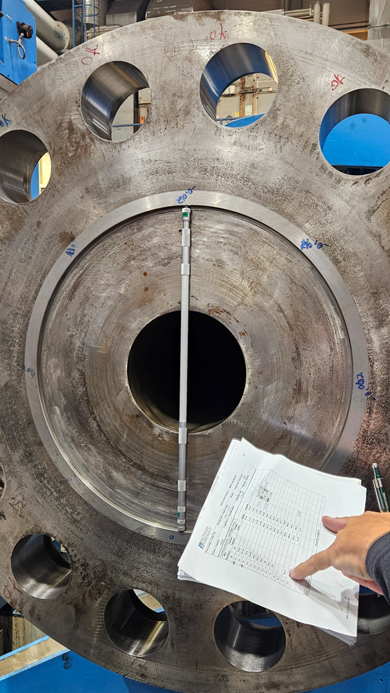
Generator shafts – runout, diameters, bores, keyways and keys
-
Bearing collars – runout measurement, UT and PT



Typical Inspections and Tests
During a turbine FAT we verify the component against the purchase order, approved drawings, quality plan and ITP, and witness or review:
-
Material testing – chemical composition, tensile, Charpy impact and hardness tests, with traceability from heat number to test coupon
-
Ultrasonic testing (UT) – castings and forgings, DGS and DAC methods
-
Magnetic particle testing (MT) – fluorescent and colour contrast, AC yoke technique
-
Penetrant testing (PT)
-
Visual inspection – including water passage surfaces
-
Dimensional control – blade profiles, bores, 3D measurement protocols and machining allowance on as-cast parts
-
Surface roughness and waviness of hydraulic surfaces
-
Runout and concentricity of shafts, hubs and bearing seats
-
Weld repair procedures and records
-
Demagnetisation after MT
-
Calibration status of all measuring and test equipment
-
Documentation review – material certificates, NDT reports, operator qualifications and manufacturing data records
Where results are acceptable we countersign the manufacturer's test reports and EN 10204 3.1 certificates on the client's behalf. Where they are not, we raise non-conformances and punch lists and follow them through to close-out.
Vendor Audits
Before orders are placed, or when a new sub-supplier is introduced, we audit foundries and turbine workshops on the client's behalf. Our audits cover:
-
Quality, environmental and safety management systems
-
Production experience with similar components
-
Design, engineering and project control
-
Sub-supplier and outsourced testing control
-
Welding procedures, welder qualifications and welding coordination
-
NDT procedures and operator qualification to ISO 9712
-
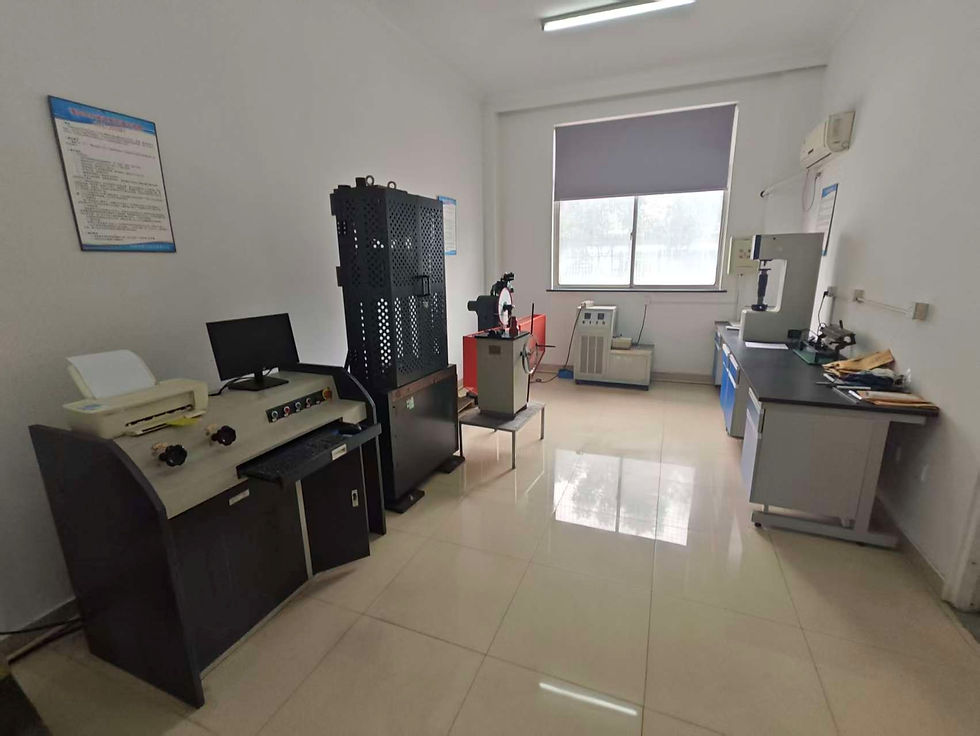
Material test traceability and laboratory calibration
-
Shop floor and HSE tour



Why Clients Choose Us
-
Independent verification – we represent the purchaser, not the manufacturer
-
Specialist inspectors – experienced in castings, forgings, NDT and precision machining
-
Rapid mobilisation – local inspectors across Europe and China, often at short notice
-
Continuity – the same inspectors follow a project from audit to final assembly
-
Clear, structured reporting – issued promptly after each visit
Deliverables
-
Inspection reports with photographs, issued after every visit
-
Countersigned test reports and EN 10204 3.1 certificates
-
Non-conformance reports and punch lists
-
Vendor audit reports
-
Expediting and progress reports
-
Copies of calibration certificates and NDT operator qualifications
-
Release notes and final acceptance documentation


